
Vancouver
Maps of Vancouver show four corridors: Highway 99, Highway 91, Highway 17, and Highway 1, with travel time index (TTI) data color-coded for each corridor.
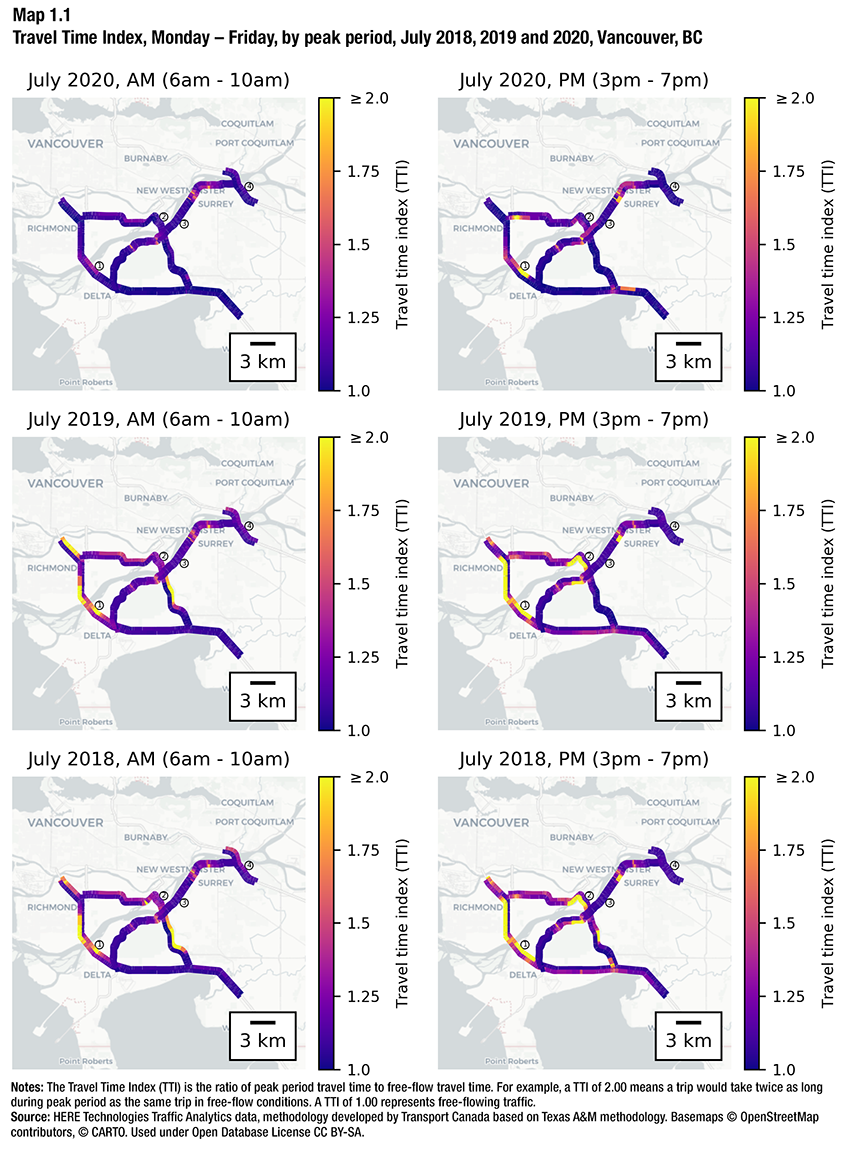
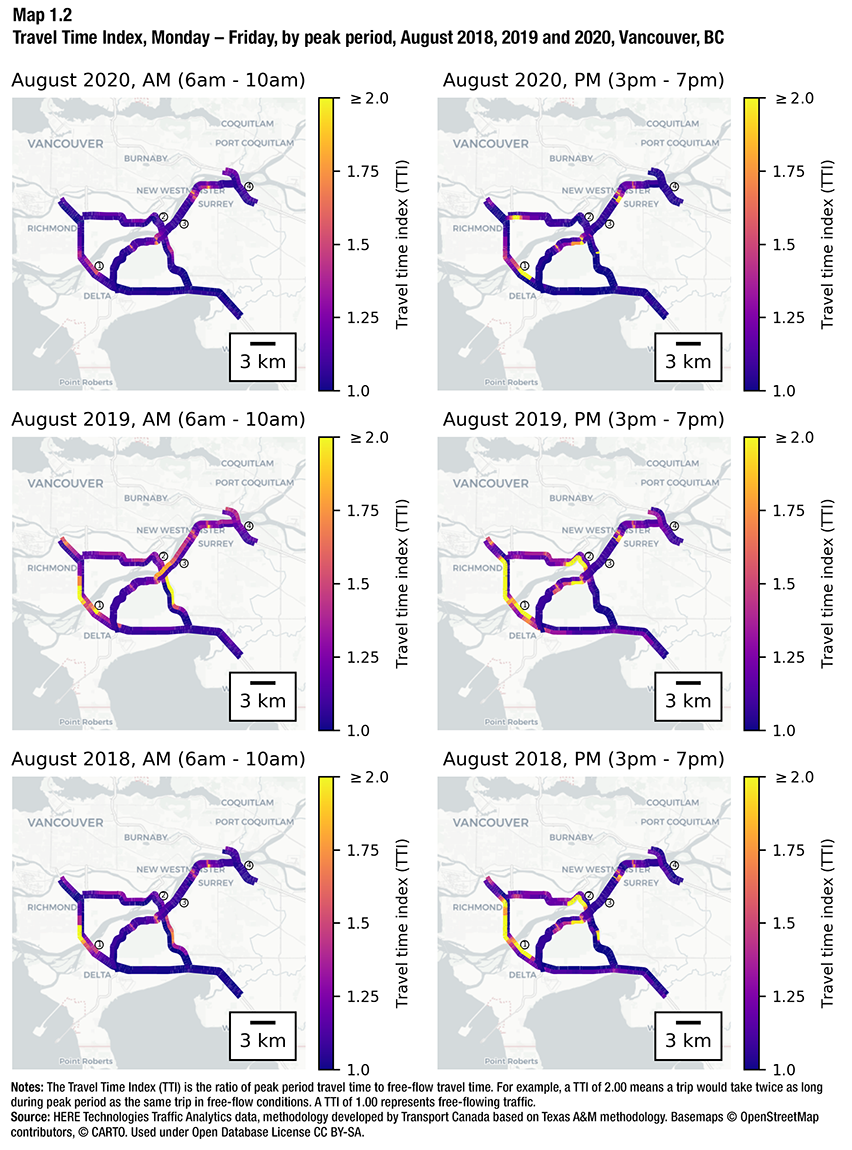
Maps of Vancouver show four corridors: Highway 99, Highway 91, Highway 17, and Highway 1, with travel time index (TTI) data color-coded for each corridor.
Urban mobility refers to a person’s ability to move around the city where they live and work. Congestion on city roads reduces mobility, which is not only an individual inconvenience but also has an economic impact. While the amount of additional time spent in traffic, excess fuel consumed, and other costs of congestion may be large in Canada, the full impact is not known. Using key indicators to evaluate congestion, its cost, and its impact on the economy is the first step to understanding the magnitude of the problem.
The Canadian Tourism Activity Tracker is an experimental data product designed to help support Canadians and businesses as they navigate through the uncharted waters of a global health crisis. As part of an effort to shift from measuring impacts of the pandemic to assessing the recovery, it provides an overall picture of the relative performance of tourism-related activity in Canada over time.
This new data dashboard provides a convenient and interactive means of extracting and analyzing current and historical data from the Monthly Railway Carloadings Survey.
What can you do with this tool?
This interactive tool can be used to drill down into the data to reveal a wide range of insights about the railway industry, from the most recent survey estimates to historical results going back to 1999.
The project report (available only in French) was published in August 2020. The project is an initiative of the Comité permanent sur la sécurité des bateaux de pêche du Québec.
The study follows up on the findings of the Transportation Safety Board of Canada's review in 2012, and a 2017 Globe and Mail investigation that found that the fishing industry was the deadliest job sector in Canada.
The study was divided in three sections: